Commercial cleaning equipment and the parts that keep it working
A machine goes down on a Monday morning with a job booked, and the first question is whether to fix it or replace it. This page covers what we sell, what keeps it alive, and how to find the answer fast.
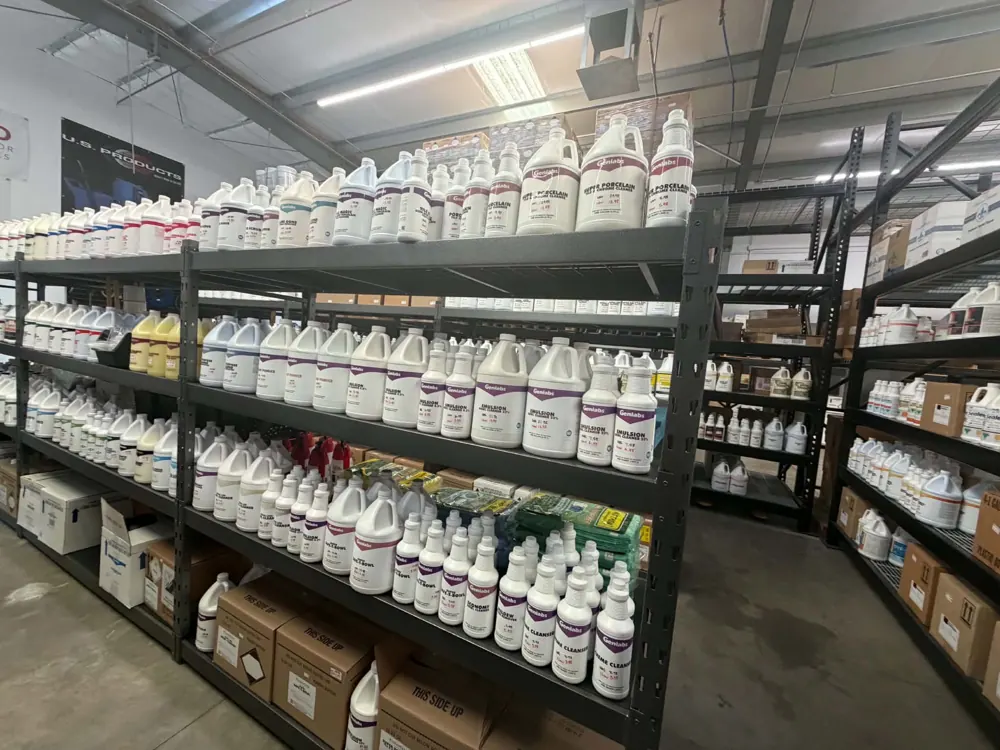
On the shelf for this work
 10-00651.5" x 1.5" Hose Connector w/Vac Release$17.98 /each
 10-00661.5" Y Connector w/Vac Release$20.98 /each
 10-13151.50" Steel Wand Handle Vinyl Coated$14.98 /each
 74-41091/4 Free Flow Female Quick Connect MPT Stainless Steel$7.98 /each
 74-41041/4 Free Flow Male Quick Connect Steel/Zinc FPT$3.98 /each
 74-41031/4 Free Flow Male Quick Connect Steel/Zinc MPT$5.98 /each
 74-43011/4 Quick Connect O-Ring Buna$0.98 /each
 74-4301-101/4 Quick Connect O-Ring Buna — 10 Pack$3.00 /pack
Portable extractors
Portable extractors are the entry point for carpet cleaning and the backup unit for plenty of established crews. The equipment aisle carries about two dozen, including the Hydro-Force Nautilus and X17 lines, in single-pump and dual-pump versions with heated and unheated options. They come in a van, they climb stairs, and they fit jobs a truckmount cannot reach.
What to look at: pump pressure, vacuum lift, tank size and whether heat is built in. A bigger tank means fewer trips to the dump spot on a large job; more lift means faster drying. If you mostly do apartments and offices on upper floors, a portable pays back quickly. If your work is mostly whole houses, a truckmount may be a better long-term fit.
Our guide to choosing a carpet extractor lays out those trade-offs in detail. Bring your typical job to the counter, and we will tell you what the machine would handle and what it would not.
Hoses and wands are part of the purchase, not an afterthought. A longer hose reaches a second-floor unit from the parking lot, and a good wand is lighter on the wrist at the end of a long day. Ask what is included in the box before you compare.
HEPA backpack vacuums
A backpack vacuum changes how a custodian works: no cord to wrap around chairs, no bending, and a hose and wand at the end of an arm. The Mosquito and Minuteman units on the shelf are made for commercial use, with HEPA filtration that keeps fine dust in the machine instead of the air.
HEPA matters more than people think. Fine dust, drywall, mold spores and pollen all pass through a standard bag. In a school, a medical office or a restoration job, a HEPA vacuum is often the right tool and sometimes required by contract. Check the filter rating, the bag or canister capacity, and the weight, because a crew that wears one for four hours will care about every pound.
The vacuum aisle includes upright, canister and backpack styles, along with the hoses, wands and filters that go with each. Replacement filters should be on your shelf before the old one clogs.
Wet-dry vacuums also earn a place in the van. They handle clean-up after a spill or a small water event, and the restoration shelf next door has the air movers and dehumidifiers for anything larger.
Floor machines, rotary units and scrubbers
A floor machine is the workhorse of stripping, scrubbing and buffing. The shelf has rotary machines in the usual 17-inch and 20-inch sizes, such as the Minuteman Front Runner, and Rotovac units for crews who work on carpet and hard floor with the same platform. Brush machines and orbital units cover other jobs.
Scrubbers are the step up. Automatic and walk-behind scrubbers like the Max Ride 20, the ROS 17 and the Port A Scrub 12 clean and pick up water in one pass, which matters in a warehouse or a school hallway that has to be dry by morning. The right size comes down to floor area, aisle width and how often the floor gets cleaned.
Match the machine to the work. A crew that strips twice a year may not need a scrubber, and a crew that cleans a big-box floor nightly would waste time without one. If you are comparing a rotary against a scrubber, tell us the square footage and the schedule.
Cords and batteries are the other question. A corded machine runs all day without charging, while a battery unit is easier to move around a building but needs a plan for charging. Think about where the outlets are before you decide, and ask about replacement batteries.
Heaters, steam and carts
The Mytee Hot Turbo and other heaters are for crews who want heat in a portable extractor setup. Added heat helps break down grease and speeds drying, which can be the difference between finishing a job and coming back tomorrow. Steam cleaners are a separate tool: good for tile, grout, upholstery spot work and sanitizing, not a replacement for extraction.
Carts sound minor until a crew spends a year without a good one. A janitor cart keeps chemicals, bags, mops and paper in one place, and moves them from floor to floor. A well-organized cart means fewer trips back to the closet and fewer things left behind.
Sprayers fill another gap. Pump-up and backpack sprayers apply pre-spray and chemical evenly, and are a cheap upgrade for a crew that uses spray bottles. The equipment aisle lists all of these with the specs on each product page.
Whatever you buy, keep the manual in the van. Torque values, filter part numbers and the maintenance schedule are all in there, and the counter can only help you faster when you can read us the model number off the plate.
The parts aisle that keeps machines in service
The parts aisle is the largest section of the equipment category, with hundreds of items. Wands, hoses, vacuum hose, chemical pumps, check valves, filters, fittings, jets and truckmount solutions are all on the shelf. These are the items that wear first and cost the most downtime when they fail.
Most breakdowns are small. A cracked hose, a clogged jet, a stuck check valve or a worn pump seal takes a machine out of service, and each can be replaced in minutes if you have the part. A van with a few spare jets, a hose and a check valve is a van that finishes the day.
Bring the old part or a photo of it, and give us the machine make and model. Matching a jet or fitting by eye can be tricky, and a good match saves you a second trip. The counter will also tell you if the part is not carried and can be special ordered.
What the Valley does to machines
Fresno summers are hard on equipment. A van at 105 degrees cooks pump seals, softens hoses and bakes residue in lines, so rinse systems after use and store machines out of direct sun where you can. Heat also stresses motors: a vacuum that runs hot all day will fail sooner than one that gets breaks.
Hard water and dust do the rest. Central Valley water leaves scale in pumps, jets and heat exchangers, which shows up as weak spray, low pressure and slow heating. A regular descaling flush, with a truckmount or machine descaler, is cheaper than a pump. Fine harvest and fall dust clogs vacuum filters faster than manufacturers’ schedules assume, so check them more often than the manual says.
A habit that helps: rinse after every job, flush on a schedule, and write the date on the machine. It takes five minutes and extends the life of everything on the list above.
Buy, repair, and what is in stock versus special order
The rule of thumb is to repair when the fix costs well under a fraction of a new machine and the unit is otherwise sound, and to replace when it is failing in several places or when the downtime costs more than the machine. A hose, a pump or a set of jets is almost always worth fixing. A motor and a pump going in the same year on an old unit is usually a sign.
Ask the counter what is on the shelf versus what has to be ordered. Machines and parts show live stock counts on the product page, and anything not on the shelf can be special ordered at the counter. We will tell you plainly how long it is likely to take, so you can decide whether to rent, borrow or wait.
Delivery works as it does for everything else. The route truck covers Fresno, Clovis, Sanger and Fowler every weekday, Selma, Kingsburg, Dinuba, Reedley, Visalia, Tulare and Hanford on Tuesday and Thursday, and Madera on Wednesday. Order by 11:00 AM for the next route day. Machines over 150 pounds go LTL on a pallet, and other orders ship UPS Ground when ordered by 2 PM.
Commercial cleaning equipment by town
Questions we get at the counter
What should I look at when choosing a portable carpet extractor?
Look at pump pressure, vacuum lift, tank capacity and whether it has built-in heat. More lift dries carpet faster and more tank capacity means fewer emptying trips. Think about the stairs and tight spaces you work in, since portable weight matters. Our extractor guide goes through the trade-offs, and the counter can help you match a unit to your jobs.
Why use a HEPA backpack vacuum instead of a regular one?
A HEPA filter captures very fine particles that pass through ordinary filters and bags, which matters in schools, medical offices and restoration work. A backpack style also removes the cord and reduces bending, so crews work faster with less strain. Check the filter rating, capacity and weight, and keep spare filters on hand.
When is it worth repairing a machine instead of replacing it?
A small repair on an otherwise sound machine, such as a hose, wand, jet, valve or pump, nearly always makes sense. If the unit has several problems at once, a failing motor, or downtime that costs you jobs, a replacement is usually better. Bring the model and symptoms to the counter and we will give you a straight answer.
Does MarCo stock parts for the machines it sells?
The parts aisle has hundreds of items, including wands, hoses, vacuum hose, chemical pumps, check valves, filters, fittings, jets and truckmount solutions. Bring the machine make and model, or the old part, and we will match it. If a part is not on the shelf, it can often be special ordered at the counter.
Can I get a machine delivered?
Yes, in route towns. Fresno, Clovis, Sanger and Fowler are every weekday, Selma, Kingsburg, Dinuba, Reedley, Visalia, Tulare and Hanford are Tuesday and Thursday, and Madera is Wednesday. Order by 11:00 AM for the next route day. Outside the route, UPS Ground ships the same day when ordered by 2 PM, and heavy items over 150 pounds go LTL.
How does Fresno’s climate affect cleaning equipment?
Heat softens hoses and ages pump seals, hard water leaves scale in pumps, jets and heat exchangers, and fine dust clogs vacuum filters quickly. Rinse machines after jobs, run a descaler on a schedule, check filters more often than the manual suggests, and store equipment out of direct summer sun when possible.
Who buys this from us
- carpet cleaning companies
- custodial crews
- floor care contractors
- restoration crews
- school and facility maintenance teams
- dealers and rental shops